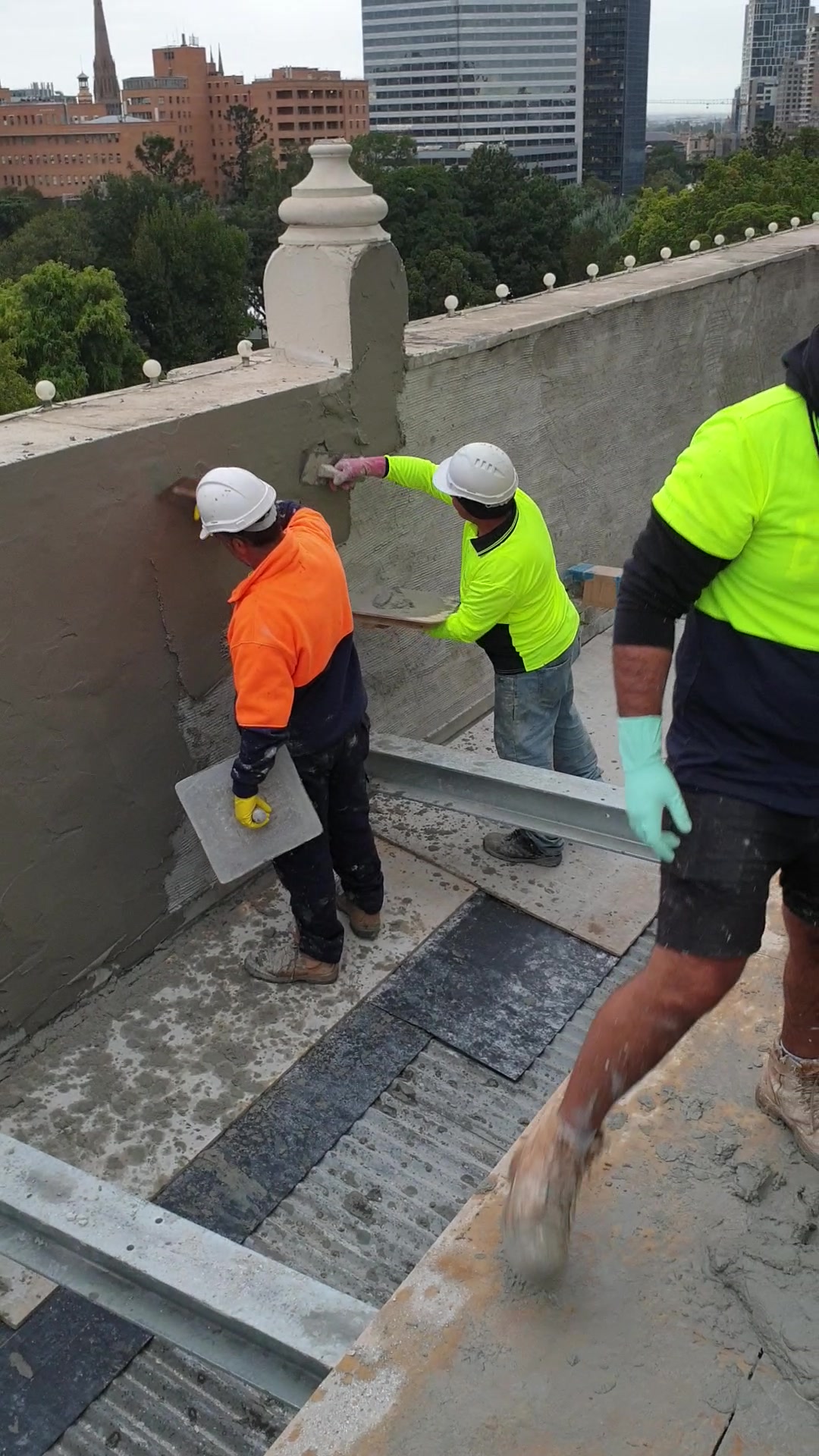
Render that’s built to last, not just to look good on handover
A rendered wall is only as good as the layers underneath the paint. Most of the render failures we’re called out to, such as cracking, drummy patches and render coming away in sheets, trace back to something that was skipped when it was first applied: the wall wasn’t prepared, there was no bonding coat, control joints were left out, or the render was put on too thick and allowed to dry out in the sun.
We render as a system. Every coat has a job, and each one goes on only when the one underneath is ready for it.
What we render
- Brick homes being updated from face brick to a modern rendered look
- Extensions and additions that need to match or refresh the existing house
- Blockwork and concrete walls, including boundary walls, retaining walls and fences
- Re-rendering where old render has failed and needs to be stripped and replaced
- Commercial walls and facades, from shopfronts to multi-unit developments
Cement render or acrylic render?
Cement render
- Sand and cement base, strong and hard-wearing
- Suits brick, block and concrete
- Needs good curing and control joints
- Usually finished with a flexible coating
Acrylic render
- Polymer-modified, more flexible
- Better at resisting fine surface cracking
- Often used as the finish coat
- Common on lightweight substrates
On most masonry jobs we use both: a cement base coat for strength and trueness, then an acrylic finish and a texture coating on top. We’ll recommend the combination that suits your wall rather than one product for every job.
How we render a wall
- Check the substrate. Cracks in the brickwork are stitched, loose or crumbling mortar is dealt with, and failed lintels are flagged before any render goes on.
- Prepare and prime. The wall is cleaned back, and a bonding coat or primer is applied where the surface needs it so the render grips.
- Beads, mesh and joints. Corner and stop beads go on, mesh reinforces the weak points around windows and doors, and control joints are placed where the wall needs room to move.
- Base coat. Applied to the right thickness, straightened and floated, then cured properly rather than left to bake.
- Finish coat. A fine, even finish in the texture you choose, from smooth to sponge-finished.
- Texture coating. A flexible membrane coating seals the render, bridges fine cracks and gives the final colour.
Want the system warranty? We’re licensed by Dulux Acratex, so a complete Dulux Acratex render and coating system can carry the manufacturer’s system warranty as well as our workmanship warranty. How our warranties work.
Already rendered and it’s failing?
If your render is cracked, drummy or coming away, you may not need a full re-render. Sound render can often be repaired and recoated for a fraction of the cost. See render crack repairs and render restoration, or send us photos and we’ll tell you which way we’d go.