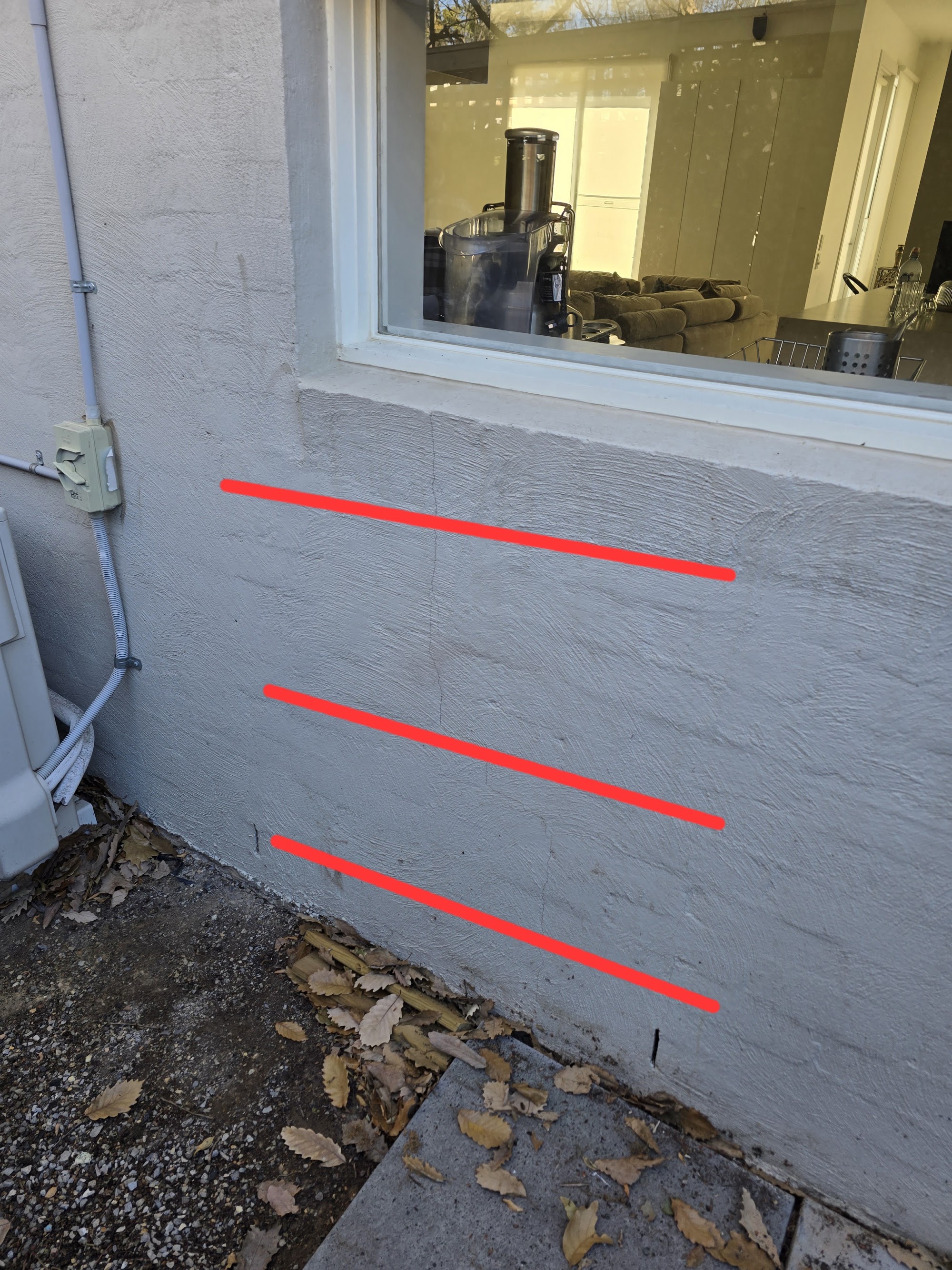
Why patching a render crack often doesn’t work
Filling a crack with a tube of filler and painting over it hides the problem for a while. If the crack was caused by movement, water or a failed bond, the same crack comes back, usually within a season or two and often wider. A lasting repair means answering one question first: what made the render crack?
What your crack is telling you
Fine map cracking or crazing
A web of hairline cracks across the surface is usually shrinkage from render that dried too fast or was mixed too rich. It’s mostly cosmetic, but it lets water in. It’s normally fixed by treating the surface and recoating with a flexible texture coating.
Cracks running off window and door corners
Corners of openings are stress points. Cracks here can come from normal movement where no mesh was used, or from a lintel above the opening that’s rusting and expanding. We check the lintel before repairing the render.
Stepped or zig-zag cracks
A crack that steps like a staircase usually follows the mortar joints of the brickwork behind the render. That means the brickwork is moving. Re-rendering over it won’t hold, so the brickwork gets stitched with HeliFix bars first.
Long straight cracks on large walls
Long walls expand and contract. Without control joints, the render makes its own joint by cracking. The fix is to form a proper joint or reinforce the area, not just to fill it.
Drummy, hollow or bulging render
If tapping the wall sounds hollow, the render has lost its bond. Those sections are cut out and re-rendered. Painting over drummy render only traps it until it falls off.
How we repair render cracks
- Inspect and tap-test the wall to map cracks and drummy areas, and check lintels, joints and the brickwork behind.
- Fix the cause: stitch moving brickwork, flag failed lintels, or form control joints where the wall needs them.
- Open up the crack and cut back loose or drummy render to sound edges.
- Repair with compatible materials, reinforced with mesh where the wall moves, built up in layers rather than one thick fill.
- Match the texture of the surrounding render.
- Recoat with a flexible texture coating so the repair is sealed and the wall has an even colour.
Will the repair show? A painted patch almost always shows in certain light. For an even finish we recommend recoating the whole wall or elevation after the repairs. We’ll tell you honestly what to expect before you decide.
When to involve an engineer
Most render cracks don’t need one. Wide cracks, cracks that are clearly growing, doors and windows that have started to stick, or signs of footing movement are different. In those cases we’ll recommend getting a structural engineer’s view before any repair, and we can work to their design.
Not sure what kind of crack you’ve got? Send us a couple of photos, one close up and one showing the whole wall.